



Barbados Tide Pools: Carved by Man and Nature
Tidal pools, also known as rock pools, are formed in rocky coastal areas, particularly on the eastern side of the island. These pools are often home to a variety of marine life, such as small fish, crabs, snails, and various types of algae.
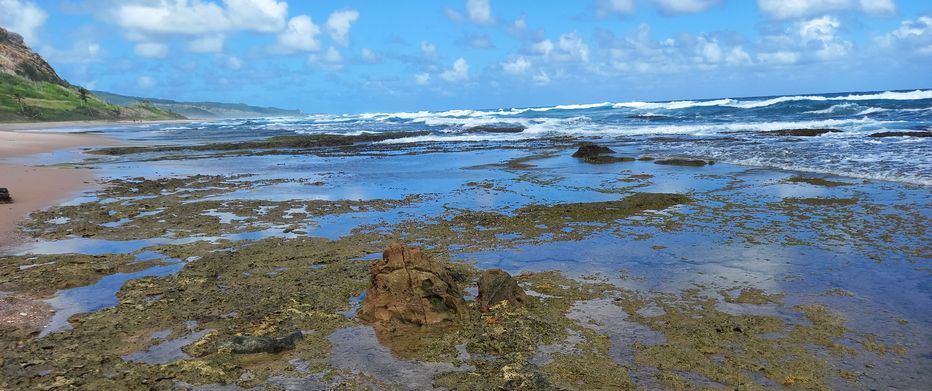
Larger tidal pools and their surrounding coral can support hundreds of fish and plant species. Mostly they are small grunts, squirrel and angel fish. Occasionally the larger deep water species like the kingfish will come in to feed and eat an angel or two. Nature's interventions such as this keep the angels on their toes.
There are often soft brown shaded areas seen around tidal pools. These are beds of sea grass growing under the water. The individual strands look just like savannah grass but they do not cluster as closely. Sea grass is an important part of the ecological chain providing food and shelter to many species and protecting the ocean floor from erosion, with a network of fine fibrous roots that hold the sand in place against the shifting tides.
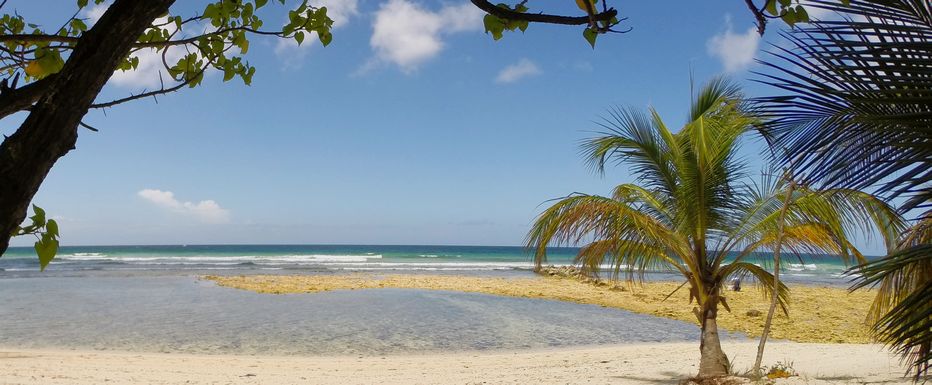
Inshore reefs and tidal pools are also important fishing areas, with locals using fish traps, catching of octopus, and spear fishing.
Larger and deeper tide pools, some man-made and some crafted by nature, make for the perfect natural jacuzzi... spots to relax, soak up the sun, and the gentle massage of the waves.
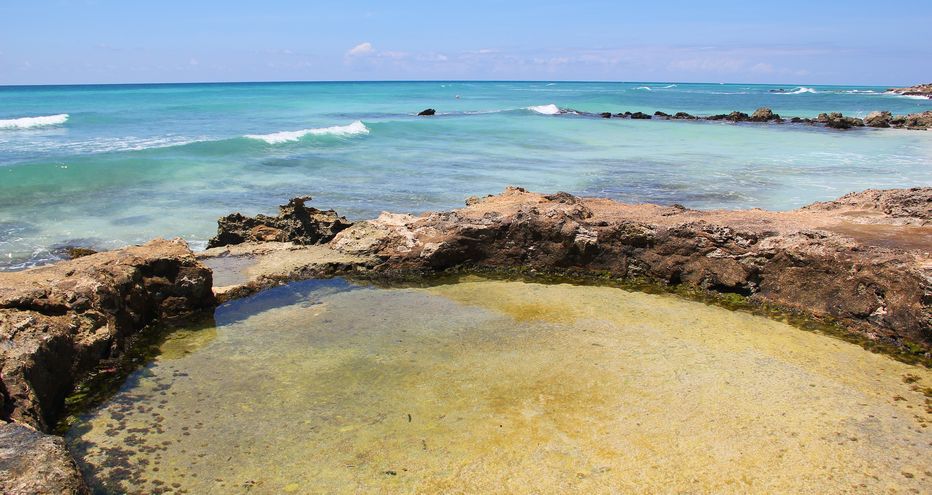
The Barbados government protects the island's natural shoreline, and its preservation is the responsibility of the Coastal Zone Management Unit.
With the creation of the south coast boardwalk, several more tide pools have emerged.
To discover more about Barbados' natural phenomena, take an island tour.
